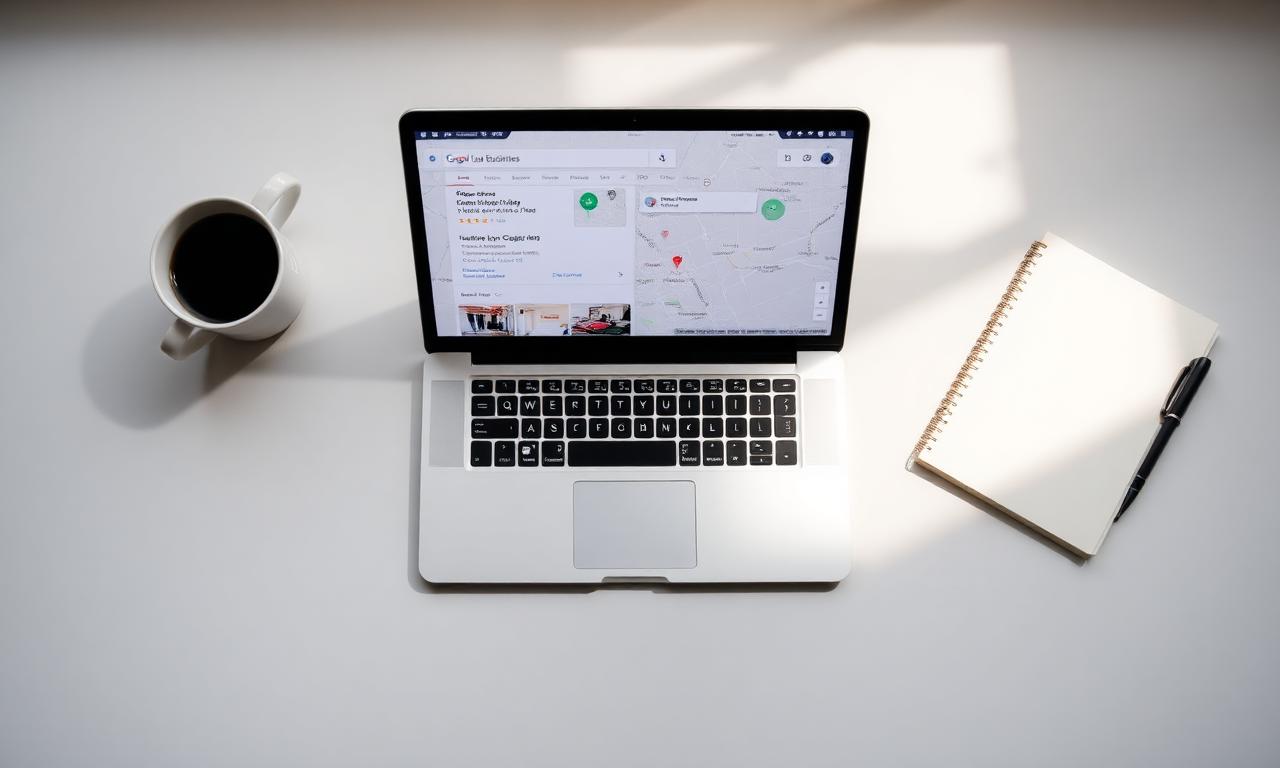
Google Maps is now the #1 discovery channel for local commerce. When someone in your city searches "roofer near me," "family dentist," or "personal injury lawyer," the three businesses in the Map Pack get roughly 75% of the clicks — and the #1 result gets the majority.
If you're not in the top 3, you're invisible.
Why This Matters
Local search intent is the most valuable intent on the internet. Someone typing "emergency plumber Austin" isn't browsing — they're buying. Winning local SEO produces the most durable lead source a business can build. Unlike paid ads, it doesn't stop when the budget stops.
Key Statistics
- 46% of all Google searches have local intent
- The top-ranking Map Pack result receives roughly 44% of clicks
- 88% of consumers who do a local search visit or call within 24 hours
- Businesses with 100+ Google reviews earn 2-3x more inquiries
The Problem
Most local businesses have a half-finished Google Business Profile, never post to it, have 12 reviews from 2019, have a website that isn't optimized for their city, have no location-specific pages, and blame "the algorithm" when nothing works.
Local SEO is not black magic. It's a checklist executed consistently for 90+ days.
Common Mistakes
- Keyword-stuffing your business name (Google penalizes this hard now)
- Not verifying and fully filling out your Google Business Profile
- Skipping service and location pages on your website
- Buying fake reviews (guaranteed suspension)
- Not responding to reviews — good or bad
- Focusing only on Google and forgetting Bing, Apple Maps, and Yelp
- Publishing generic blog content unrelated to your service area
Step-by-Step Guide: The 2026 Local SEO Playbook
1. Nail Google Business Profile fundamentals. Exact legal business name (no stuffing), correct primary and secondary categories, full service list, detailed service areas, hours, high-quality photos updated monthly.
2. Get review velocity right. In 2026, review velocity matters as much as total count. Aim for 5-15 new reviews per month. Every review response should include the reviewer's name, a specific service reference, and a natural city mention.
3. Optimize your website for local intent. Include city and service in title tags: "Emergency Plumber in [City] | [Business Name]." Add schema-marked NAP in the footer. Create a dedicated page per service and per city.
4. Build location pages that actually rank. Weak location pages ("We serve [City]. Contact us today!") don't rank. Strong ones do: 700-1,200 words, localized headline, landmarks, testimonials from that area, embedded map, localized FAQ.
5. Publish local content consistently. 2-4 pieces per month tied to local intent: "Best time to schedule AC maintenance in [City]," "[City] first-time home buyer guide."
6. Build real, local backlinks. Prioritize chamber of commerce, local news outlets, local sponsorships, guest posts on regional blogs, local podcast appearances. Ten strong local links outperform 500 spammy ones.
7. Manage citations & NAP consistency. Every mention of your business online should match exactly across Yelp, Apple Maps, Bing Places, Facebook, and industry directories. Tools like BrightLocal or Whitespark automate this.
8. Post to Google Business Profile weekly. Offers, recent projects with photos, educational tips, team updates. Every post is another "active business" signal.
9. Optimize for AI Overviews & zero-click results. Use clear H2 questions and direct 40-60 word answers. Add FAQ schema. Build genuine E-E-A-T: author bios, credentials, real photos.
10. Track and iterate. Map Pack rankings by keyword and grid location. GBP calls, direction requests, website clicks. Organic traffic per city page. Conversions from organic.
Best Practices
- Never manipulate your business name
- Respond to every review within 24 hours
- Add fresh photos every month
- Keep page speed under 2 seconds on mobile
- Answer every Q&A on your GBP yourself
- Refresh location pages every 6 months
- Use call tracking to attribute inquiries to specific keywords
Local SEO isn't a project. It's a monthly system. Businesses that treat it like a subscription — not a launch — dominate their city.
Tools Recommended
- Rank tracking: Local Falcon, BrightLocal, Places Scout
- Citation management: Yext, Whitespark, Moz Local
- On-page SEO: Surfer SEO, Clearscope
- Site audit: Ahrefs, Screaming Frog
- Reviews: Podium, NiceJob, GatherUp
- AI automation for lead follow-up: platforms like luminaserve.com to instantly respond via SMS, email, or chat 24/7
Case Study Example
A single-location personal injury law firm was on page 2 for every meaningful term. We executed a full GBP overhaul, 12 new service and location pages, structured review automation targeting 10/month, 8 high-quality local citations and links, FAQ schema across all pages, and call tracking + AI SMS responder.
Six months in: Map Pack rankings top 3 for 14 keywords (from 0). Organic traffic +186%. Monthly qualified case inquiries from organic: 7 → 34. Google review count: 28 → 141.
No black-hat tactics. Just the fundamentals executed monthly.
Frequently Asked Questions
How long does local SEO take? Meaningful movement in 60-90 days, dominant rankings in 6-12 months for competitive markets.
Is Google Business Profile enough on its own? No. Website authority, backlinks, and content amplify GBP rankings.
How many reviews to rank in the Map Pack? No fixed number. Competitive metros often require 100+; smaller markets can rank with 20-40.
Can I rank in a city I don't have an office in? Only if you have a legitimate service area. Fake addresses lead to suspension.
Does adding my keyword to my business name help? It's against Google's guidelines and increasingly triggers penalties.
How important are backlinks? Very. Quality local backlinks are one of the top ranking factors for competitive terms.
Should I optimize for voice search? Yes — FAQ schema and conversational long-tail queries handle this naturally.
Can AI content rank? Only if edited to add real expertise, examples, and local specificity.
What's the biggest local SEO mistake in 2026? Treating it like a one-time project. Rankings decay without ongoing activity.
Conclusion
Local SEO in 2026 is won by businesses that show up like real businesses: complete profiles, fresh photos, consistent reviews, useful content, real backlinks, and a website that treats each city and service with intention.
There's no shortcut, but there is a system — and it compounds. Six months of disciplined work will outrank two years of sporadic effort.
Ready to stop being your city's best kept secret?
At Pulse Social, we help businesses generate more leads through strategic marketing systems that combine content creation, paid advertising, AI automation, SEO, and conversion-focused websites.
Book your FREE Growth Strategy today and discover how we can help your business grow faster.
- The Problem
- Common Mistakes
- Step-by-Step Guide: The 2026 Local SEO Playbook
- Best Practices
- Tools Recommended
- Case Study Example
Let's grow your business
You've read the playbook. Now let's build the system that turns it into real revenue for your business.
- More Leads
- Better Branding
- More Customers
- AI Automation
- Paid Ads that Convert
30 minutes · No obligation · Personalized roadmap